Showing posts with label memoir. Show all posts

Friday, November 09, 2012

A Most Fascinating Project


Today I would usually be posting over on The Blood Red Pencil, but I invited another blogger to post about a most fascinating project.  

Roseanne Rini, one of the editors with Story Circle Network, has thirty-five years of experience teaching college English and Women's Studies and a special interest in women's diaries and memoirs.

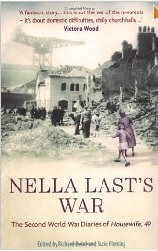
Her post today is about a book called Nella Last's War: The Second World War Diaries of Housewife, 49, about a program in Great Britain back during the time of WWII. Housewives were asked to keep a diary and send in their entries to a social research program. Nella Last did that, diligently. She was, in fact, the only one who continued to send in her posts for longer than two years. She sent entries in for almost 30 years.

The story of Nella and the Mass Observation social research program is fascinating.

I hope you'll link over and read Roseanne Rini's post. If you're like me, you'll be wanting to buy the book called Nella Last's War.

Here's the link to her post. Leave a comment there.

Saturday, April 14, 2012

2012 Story Circle Network Conference

 This weekend, I'm at the Story Circle Network Conference in Austin, Texas. If you're there, too, find me and say "hi." I say find me because I have no idea where exactly I'll be. Thursday night I helped put together the welcome packets for attendees and yesterday morning I did Heart to Heart coaching. After that, I'll be wherever they put me. I volunteered to work the conference.

 I may be working the check-in desk. I may be directing attendees to meetings and lunch. I may be the time monitor for someone's session. I may be doing a quick clean up in a room before the next session starts. I may be at lost-and-found. If you find me and I'm lost, take me there. I'll just stay there until everyone leaves and I can see where I parked the car.

Thursday, March 29, 2012

Editorial Services

Probably most of you know I’m a freelance editor. What you may not know is that I’ve put that on hold. Back in mid-January, I took over as the Coordinator for Story Circle Network’s Editorial Services. So, I’m no longer taking on new clients, but am continuing to work with writers for whom I’ve edited before.

Unless you write memoir or life stories and are a woman, you may not have heard of Story Circle Network. If you do write memoir or have ever thought of writing about your life or family, then you probably know about Story Circle Network. If not, let me introduce you:
The Story Circle Network is a national not-for-profit membership organization made up of women who want to document their lives and explore their personal stories through journaling, memoir, autobiography, personal essays, poetry, drama, and mixed-media.
SCN’s headquarters are in Austin, Texas, but they also have an Internet chapter, Story Circles in local communities, online classes, book review website, e-letters and a mentorship program. Plus they have a national conference every other year. This year’s is coming up in April. And they have an editorial service which offers different levels of editing from proof reading all the way to ghostwriting – and 17 editors to choose from. No matter what genre you write, memoir, thrillers, sci-fi, mystery, romance, you can find an editor who edits that. And the service is open to men as well as women.

Before this devolves into a sales pitch, what I wanted to do was let you know what’s going on in my life and to tell anyone who is coming to the April 13-15 Story Circle Network Conference, look for me. I’ll be doing one-on-one coaching Friday morning. After that, I’ll be wherever they put me. I volunteered to work the conference.

Saturday, February 04, 2012

Book Review: The Pig and Me

You might be wondering what a memoir called The Pig and Me is about. Well, it’s not about a pig – not a real one, anyway. It’s about the author, Lindsay Frucci, and her idea, drive, commitment, and work to start a company. ‘Course, she’s not the pig. The pig is a cute little pink pig with a tape measure around its waist – and it’s on the packaging of her product – No Pudge Brownies.

She literally starts with nothing except a desire to help the family. Then she begins learning what it would take to start her own company, testing recipes to come up with a fat-free recipe, and getting her product into stores, hopefully all over the U.S.

I found it fascinating to learn what she went through to start the company and promote the product, all while she’s not just a woman starting a company. She’s a mother, a wife, housekeeper, head cook, chauffeur, and all the work hats that come with being married with kids. But she is absolutely committed to building the company and helping support the family.

I think if you’ve ever started your own company, you’ll want to read The Pig and Me and will probably identify with Lindsay Frucci. And if you haven’t, like me, you’ll be amazed at all she does and the cost it takes on her and her family. Frucci takes what could have been a step-by-step how-to for starting a company from nothing and taking it nationwide…and writing it in such a way that it becomes a personal story of hard work, triumph and will.

I really, really liked The Pig and Me, even though I’d never heard of No Pudge Brownies.

Amazon
Nook
Smashwords

I give The Pig and Me by Lindsay Frucci a rating of Hel-of-Writer.
~~~~~~~~~~~~~~~~~~~~
FTC Disclaimer: The author Lindsay Frucci sent me the e-book. That did not influence my review. I could have given this a rating of Hel-of-a-Story, but I decided it was Frucci who make the story compelling and one I wanted to pick up each morning and read. The one thing I regret is that I’d never heard of No Pudge Brownies and wish I had. I’d give them a try. I’m thinking they didn’t make the shelves of my grocery store. I definitely would have bought a fat-free Raspberry Fudge Brownie Mix or a fat-free Cappuccino Fudge Brownie Mix. Okay, raise your hand if you’re thinking any kind of fudge brownie mix cannot be fat-free. I would agree, except she had her recipe analyzed by a Food Laboratory. Snort. She could have just asked me, I would have been very conscientious in my testing. It may have taken me a while, though. Say, two or ten or fifty batches.

Saturday, December 17, 2011

Book Review: Raising Abel

 Raising Abel by Carolyn Nash is a memoir. It’s not her life story from birth to now. It’s more of a telling of a certain time in her life. Raising Abel covers the period of Nash’s life from when she adopted Abel until he is grown.

This book scared me. Made me laugh. Made me want to cry. Amazed me by Nash’s honesty and no holds barred way of telling her story. I may read it again, only this time, I’ll read more slowly instead of rushing to find out what happened next.

You get an idea of the story to come when you read the opening paragraph in the Prologue:
Abel came into the kitchen while I was scrambling some eggs. “I’m going to kill you with a big knife,” he said shyly.
Nash is brave. Her story is told without sugar coating – for her or for Abel. And anyone who believes a woman who adopts a child cannot feel the same depth of love for that child as a woman who gave birth to a child should read this book.

Amazon

Kindle

Raising Abel is the most honest memoir I’ve read. I most definitely give Raising Abel a rating of Hel-of-a-Story.
~~~~~~~~~~~~~~~~~~~~
FTC Disclaimer: The author made this book available for me to download. Although I thought that was very nice of her, it did not influence my review. I was influenced by Carolyn Nash’s perseverance, her commitment to loving Abel, and her honesty not just about Abel but about herself. By the end, I wanted her to write the next story of her and Abel. I want to know where their lives go from here. I also want my family not to search the house for Christmas presents while I’m at Barnes & Noble wrapping gifts to raise funds for the Bess Whitehead Scott Scholarship Fund. To anyone not in my family, but looking for places to hide gifts, I recommend the freezer, the attic, the dirty clothes hamper, and the cleaning supply cabinet.

Sunday, November 13, 2011

Book Giveaway: Treasure Hunter

This past Wednesday, W.C. Jameson stopped by to answer my questions about his latest book, Treasure Hunter. It was fun having him here on Straight From Hel. Also fun was getting the opportunity to draw a name from all the commenters and giving that person a copy of his book.

The winner is: Yvonne Osborne.

Congratulations Yvonne!

Jameson’s publicist, Stephanie Barko, will be getting Treasure Hunter: Caches, Curses and Deadly Confrontations out in the mail to you.

Saturday, November 12, 2011

Book Review: My Zoo World

 Joanne Faries has written a book about her life – or to be more accurate, a book about her phobia. She’s afraid of animals. Dogs, cats, horses, goats, lizards, you name it, she’s afraid of it. And she has tales from her life to prove why. It’s not like she runs at the sight of a horse or dog. As you read her book, you discover she’s ridden horses, reluctantly. She’s been around dogs and other animals. But something always goes wrong and she’s never happy or comfortable around them.

For example, as a child she, along with other neighborhood kids, went to a neighbor’s house to ride their new Shetland pony. Her friends had a grand time. She did not. The pony bit her.

Then there was the time her son Kevin, who loved animals and longed to have a pet in the no-pets household, talked her into letting him have a fish tank. The fish didn’t last long, but Kevin, in cahoots with his dad, got a lizard. She found out when she heard the chirping of crickets (dinner for the lizards).

Then there was the swan. The Swedish swan. Oh, but I’ll let you read that one and all the other stories yourself.

If you, too, are scared of certain animals, you’ll sympathize with Faries phobias. If you aren’t, then you’ll be amazed at how things go terribly wrong every time she’s around any kind of animal.

My Zoo World is a fun read, although clearly not fun for Joanne Faries. As she says in the prologue, “It is a dog eat dog world and I’m mere kibble.”

Amazon
Barnes and Noble
Smashwords

I give My Zoo World (If All Dogs Go to Heaven, Then I’m in Trouble) by Joanne Faries a rating of Hel-of-a-Life-Story.
~~~~~~~~~~
FTC Disclaimer: The author sent me a PDF copy of her book, but that did not influence my review. I was a bit excited (before I even read the book) that I could not only download it, I was able to open it by using iBooks. Yay! I was influenced by Joanne Faries’ plight. I can’t imagine being scared of all animals, dogs, cats, lizards, birds …. I had a dog as a child and my kids had dogs and cats. As a young child I had a mud turtle. I found him in the creek and kept him in a pan with water. I loved that little turtle. But we won’t talk about what happened to him. Let’s just say it involved an overnight freeze and me accidentally leaving him in the outside shed. I also had chickens, each a different color, each with its own name. I raised them to big chickens. They all ran away one day while I was at school. My mother told me about their disappearance at dinner, as she passed the chicken casserole. Hmm, perhaps I should write a book.

Wednesday, November 09, 2011

Author W.C. Jameson

 Best-selling treasure author W.C. Jameson is here today to answer a few questions about his writing. First, though, let me tell you a bit about him. He’s the award-winning author of 70 books, 1500 articles and essays, 300 songs, and dozens of poems. His prominence as a professional fortune hunter has led to stints as a consultant for the Unsolved Mysteries television show and the Travel Channel. He served as an adviser for the film, National Treasure starring Nicolas Cage and appears in an interview on the DVD. Jameson has written the sound tracks for two PBS documentaries and one feature film. His music has been heard on NPR and he wrote and performed in the musical, “Whatever Happened to the Outlaw, Jesse James?” Jameson has acted in five films and has been interviewed on The History Channel, The Travel Channel, PBS, and Nightline.

Welcome W.C. Let’s get right to the questions.

 Your latest book, Treasure Hunter: Caches, Curses, and Deadly Confrontations, is an adventure memoir of some of your most memorable expeditions. Why did you write this book?
At first I did not want to write Treasure Hunter. The principal reason is related to the fact that one of the best advantages a professional treasure hunter can have is anonymity. The truth is, most of what I do as a professional treasure hunter is illegal, therefore the less that is known about me and what I am involved with, the better.

My wife has encouraged me for years to write about my adventures as a treasure hunter. I resisted but finally gave in a few years ago for a couple of reasons. Because of age and increasing obligations relative to writing, speaking, and other things, I am no longer as active as I once was. The partners I worked with for years are either dead or have moved on to other things. Most of my recovery expeditions required the cooperation of several men – since they are no longer active, I have cut back on my own my involvement.

While I still have a couple of treasure recovery projects on the burner, neither is likely to be affected by the release of this book.
Do you still hunt for lost mines and buried treasures?
Yes. I have a couple of ongoing projects I won’t discuss. In addition, there are still a number of caches of Spanish gold and silver we had to abandon in Mexico for a variety of reasons. I am tempted to try to go back and retrieve some of those, but recovering and transporting such things in Mexico is very difficult these days.

One of my current projects is located in Arizona, another in Texas. That’s all I’m going to say about that.
Interesting. You are regarded as the best-selling treasure author in the world. How many books about lost mines and buried treasures have you written?
Of my 70 books, at least 22 have dealt with lost mines and buried treasures. The first was published in 1988. All but two are still in print. During the next few years at least 12 more will be released.

I have had the good fortune of having publishers contact me about writing books for them. These books sell well and make the publishers money. With a renewed interest in this country for searching lost mines and buried treasures, the books seem to be in great demand.
What is your next book?
At this writing I am awaiting the release of three books:

Lost Mines and Buried Treasures of Arkansas
Lost Mines and Buried Treasures of Missouri
Billy the Kid: The Lost Interviews

Billy the Kid: The Lost Interviews can be considered a sequel to my best-selling Billy the Kid: Beyond the Grave. Searching for lost or missing people is very similar to researching and seeking a lost treasure cache. In this case, the man we searched for was the outlaw Billy the Kid who, in truth, was never killed by Sheriff Pat Garrett but went on to live in hiding for another 69 years.

The evidence for this is found in Billy the Kid: Beyond the Grave. A few so-called experts on historical American outlaws have gotten upset because my findings make a lie of what has long been perpetuated as the truth. These experts have been challenged to debate me for years but none have responded.
Thank you W.C.

W.C. Jameson lives in my home state of Texas, but no matter where you live, keep an eye out for him. When not working on a book, he tours the country as a speaker, conducting writing workshops and performing his music at folk festivals, concerts, roadhouses, and on television.

W.C. will try to stop by today, so leave a comment or a question. Then check back this Saturday when I’ll announce who wins a paperback of Treasure Hunter. All commenters will be entered in the drawing!

Tuesday, November 08, 2011

Book Review: Treasure Hunter

 Treasure Hunter: Caches, Curses, and Deadly Confrontations is a memoir by W. C. Jameson. It doesn’t cover his entire life, as that would take many books (in the front of the book, there’s a full page of Other Books by W.C. Jameson). This one covers highlights of some of the treasure hunts he’s been on in Texas and Mexico.

You might think treasure hunters hear about a buried treasure and they pack their bag and head out to find it. In the end, they stumble upon a fabulous fortune, sort of like in the movie National Treasure. That’s not the reality in Jameson’s life and adventures. He and his three fellow treasure hunters often spend months researching, trying to pinpoint where a certain treasure might be located. When they set out, they are loaded with equipment they’ll need and are aware of how dangerous each expedition can be.

He’s written many other books, but since this one was set in Texas and Mexico, just about every expedition involved rattlesnakes, huge ones in big hives. Enough of them to quell any ideas I might have ever had about going on a treasure hunt. One hunt included quick sand that almost cost him his life; another involved deadly dust. In a lot of the tales, the four friends go home empty handed. More often than not, they find the treasure, but they can’t always take it home (Remember the previous comment about hives of huge rattlesnakes? Throw in people shooting at the team and other obstacles, including near death experiences.)

Jameson has had some amazing, scary, adventures. In his final chapter, he says that the only time one can fully understand what a privilege it is to just be alive is “when one has faced death and survived.” He writes: “I feel sorry for those who have never undertaken a quest, and whose only exposure to adventure is movies.”

Although I disagree with him on that, I have to say that he’s lived a full and exciting life. Because of that, I give Treasure Hunter: Caches, Curses, and Deadly Confrontations a rating of Hel-of-a-Life-Story.

Click to buy a copy of Caches, Curses, and Deadly Confrontations

***
FTC Disclaimer: When publicist Stephanie Barko asked if I’d like to read Treasure Hunter: Caches, Curses, and Deadly Confrontations by W. C. Jameson, I thought, hmm, I don’t read a lot of memoir. Then, she told me the author was a consultant for the movie, National Treasure. Well, my husband is a fan of the movie and watches it about once a year, so I told her to send the book to me. The tales are high adventure and almost every quest is a near death experience. My husband knows about near death experiences – he has one every time I cook dinner.
And here’s a bonus: Tomorrow, W. C. Jameson will be here on Straight From Hel answering some questions of mine. Not only that, we’ll be doing a giveaway!

Thursday, July 21, 2011

Author Karen Walker

 Author Karen Walker is well known for her memoir, Following the Whispers. (Back in May of this year, I reviewed her book.) She agreed to stop by today to talk about her newest writing adventure - a book of fiction. Now that she’s stepped across the abyss between the two genres, she’s here to tell us her experience and to answer the question:

Writing Memoir Versus Writing Fiction - Is There a Difference?

If I had been asked this question before I began writing a novel, the answer would have been a resounding, “Yes,” because I didn’t think I was a fiction writer. I’d been writing non-fiction for 30+ years as a public relations professional. And it took 10 years for me to bring my memoir into the world.

With memoir, I didn’t need to dream up characters--they were the people in my life. There was no plot invention--it consisted of actual events. No creating scenes with dialogue. I simply had to remember.

Good memoirs read like novels. You care about the characters. The story moves forward with the main character facing obstacles. There is a beginning, middle and end. The difference, then, is that the memoir is true. I won’t get into the controversial issue of truth in memoir--that’s a whole other blog post. So, for the reader of memoir versus fiction, the fact that it’s a true story may be the only difference.

For me, the writer, however, the difference has been huge. With memoir, I had my entire life to draw upon. Yes, I had to choose which events to include, whom to leave in and out, what snippets of dialogue would convey what I wanted. With a novel, one only has their imagination and some research.

You might wonder why I chose fiction now, rather than stick with a genre I’m familiar and comfortable with. I didn’t. It chose me. I was vacationing in Ireland when a voice asked me to tell its story. I’ve been discovering who and what the voice is ever since. I’m not ready to talk about the story yet, but I can say it isn’t easy opening up, allowing it to emerge.

Memoir isn’t easy either. I opened in a different way, willing to speak my truth about bad choices and tough decisions. Being a fiction writer is a different kind of tough. Whichever genre you work in, the craft similarities are there. It’s the emotional journey, I think, that makes writing them so different.

Helen, thank you so much for allowing me to guest here today. You are such a gift to writers of all genres.

Blessings,
Karen

Thank you so much, Karen!

I don’t write memoir, so I find it fascinating to hear from those who do - and who also write fiction. Karen, not only has written her memoir, Following the Whispers, she’s published essays in newspapers and magazines, as well as an anthology series. She’s also spent more than 30 years in marketing and public relations. One, among many, things I found interesting about Karen is that after those 30 years, she went back to college to complete a Bachelor's degree and graduated Summa Cum Laude in 2005 from the University of New Mexico's University Studies program with a major emphasis in Creative Writing. One thing she might not tell you, but I will … she does international folk dancing and has a beautiful singing voice.

What about all of you? Do you write both fiction and memoir? Would you like to? What questions or comments do you have for Karen?

Thursday, May 19, 2011

Book Review: Following the Whispers

 Following the Whispers, a brutally honest memoir by Karen Walker, was a 2009 Finalist in the New Mexico Book Awards. Karen doesn’t hold back. She lays out her childhood and her adulthood for the reader, without glossing over anything. I think it may be the most sincere memoir I’ve read.

She starts the book in her childhood when she was three and refused to go to bed and the punishment she received from her mother. There are stories in the book that are difficult to read, but I kept reading because I know Karen online; therefore, I know she survived. I know that she becomes whole.

She takes readers along on that journey to become whole. We live through the bad times and the good times -- through her spiritual journey to the point where she is now. This is not to say that everything is perfect in her life. She tries many paths, religions and books until she learns to listen to the whispers of Spirit within herself.

That journey is a most interesting one, although until she begins to trust and believe in herself, it is often a sad and complicated journey. The story of her life affected three generations: her parents, herself, and her son.

This is from the first page of her story:
Childhood should be a sanctuary -- a refuge before the onslaught of life -- a cocoon in which one feels unconditionally loved….My childhood was no such thing.
Karen shows us how this affected her teenage years and her adulthood - as well as the life of her own son. How it still affects her today.

Following the Whispers by Karen Walker
Amazon
Barnes and Noble

I give Following the Whispers a rating of Hel-of-a-Story.
~~~~~~~~~~~~~~~~~~~~
FTC Disclaimer: The author Karen Walker sent me Following the Whispers. That did not affect my review. Her memoir, a story of finding inner peace and self-acceptance despite all that happened to her, affected my review. Although, I would say to Karen, You need to put a warning on this book: Do Not Read in Public. I read Following the Whispers on a flight from Austin to El Paso. Then I had a four-hour wait until my husband arrived from Denver before we could head to Las Cruces, New Mexico. So I sat near the baggage area and read. And cried. And tried to hunker down when security kept eyeing me.

Thursday, March 03, 2011

Book Review: I Romanced the Stone

I started I Romanced the Stone by Marvin D. Wilson, then put it down. This book was not for me. Chapter One is a How-to on crack cocaine. Chapter Two is a condemnation of my generation, those of us who grew up in the “hippie” era, except I knew no one Marvin described. It made me angry that he lumped all of that generation into drugs, free love, and tuning out.

Then a couple of weeks ago, I went on vacation with my husband. I packed books, one of them Marvin’s I Romanced the Stone. I started over from the beginning. I still felt the same after those first two chapters. But I kept reading.

Marvin is very open about his failures and the spiral downward his life took because of drugs. He not only hit bottom, he began to dig a hole and just kept digging. Deeper. Until he lost everything. His home, his job, his family. And yet his family did not abandon him.

When he was not willing or able to save himself, his family saved him. And he began to see that his life was worth saving. That he could come back from devastation and drugs, with the help of his wife and family, a spiritual recovery program, and God.

Lest you think Marvin had never been taught to turn to God, he says in his bio that he is the son of a Christian minister. But crack cocaine was more powerful than what he’d been taught, more powerful than his love for his wife, more powerful than Marvin himself.

Here is the back cover blurb:
Caution: Do not buy or read this book if you are timid, or of tender sensibilities. The story inside is the true, uncensored reality of the life of a crack-head; the harsh reality of the lifestyles, evil places, characters, and dangers that are rampant in the inner city streets of America. This is not fiction, and it is not pretty. If you can’t take the heat, stay out of the kitchen.

However, if you can handle the truth, and wish to stay around for dinner, you will be rewarded with a banquet, a celebration feast, held in honor of one crack-head whose life was spared, who was made whole again, and who wishes to share his spiritual message of hope and advisement with all who will listen.
Marvin writes his life. Not mine. I came to see that this is his memoir, his experiences, his words. They are powerful words. He went into the depths of Hell and came out with hope and a future.

I Romanced the Stone
Amazon
Barnes & Noble

Marvin D. Wilson stood up and told his story, a dark tale of drugs and a bright hope of redemption. I give I Romanced the Stone a rating of Hel-of-a-Story.
~~~~~~~~~~~~~~~~~~~~
FTC Disclaimer: The author, Marvin D. Wilson, sent me this book. He did not ask for a review. I decided on my own to write one. I admire Marvin for writing this book and sharing his story with others. It’s a dark story, but it has a bright ending, one which others may find inspiring and life changing. There is not rating system for books like there is for movies, but I recommend it for adults, not children or teenagers, unless you feel they are sinking and need a rope to grab hold of, a true story of someone who survived.

Saturday, February 26, 2011

Book Review: An Extraordinary Year of Ordinary Days

An Extraordinary Year of Ordinary Days by Susan Wittig Albert is an extraordinary book. At its base, it is her journal for the year 2008. You can open it to almost any page and be captivated….
January 2, 2008, Coyote Lodge, New Mexico
Yesterday was the beginning of the new year. Today is the beginning of my personal new year: my birthday….

March 23
Breathtakingly beautiful spring day, daffodils massed along the woods, redbuds clouded in purple, Chickasaw plum, its blossoms as frilly as the finest lace….

June 4
Having lunch with your editor: a prime privilege of the writing life….

November 3
Everything in the country seems to be on hold, all eyes, all thoughts focused on the election. On television, it’s all politics, all the time.
But not for me….
I was hooked from the first page. In the sidebar, she puts quotes from the news of the day and relevant quotes from other writers, actors, politicians or people who had something to say. Right off, I decided I would read her journal, then come back and read the sidebar items. I soon realized how important those “extras” were. They added to her words, her thoughts. I found myself amazed at Susan’s intellect and wide-spread knowledge.

Each chapter is a month in that year. At the end of each chapter is a listing of the books she read that month. She reads more in a month than I do in a year. She reads anywhere from 8 to 13 books every month.

This is in addition to her writing, which she talks about in the book. Occasionally, she throws in delicious sounding recipes and how-tos, including how to cook in a solar oven.

Here’s part of the back cover blurb:
Albert’s journal provides an engaging account of how the business of being a successful working writer blends with her rural life in the Texas Hill Country and the Sangre de Cristo Mountains of New Mexico. As her eclectic daily reading ranges across topics from economics, food production, and oil and energy policy to poetry, place, and the writing life, Albert becomes increasingly concerned about the natural world and the threats facing it, especially climate change and resource depletion. …
I was fascinated by not just her life, but her writing. I have known Susan Wittig Albert for many years, but until reading this book I did not know her. And this is only a glimpse into her thoughts and life. This is a book for writers. A book for those who want to do something to better the environment. A book for those who want to hear the silence as often as they hear the noise. A book for those who want to stand in the shadows and witness a life well-lived. An Extraordinary Year of Ordinary Days is a captivating book.

An Extraordinary Year of Ordinary Days
Barnes & Noble
Amazon
University of Texas Press

Susan Wittig Albert writes mystery, young adult, and books for women on work and life writing. Not counting the books she has written alone, she and her husband, Bill, have written more than 70 books together. She’s the founder of Story Circle Network. She is not a new-to-me writer, but I still give An Extraordinary Year of Ordinary Days and Susan a rating of Hel-of-a-Writer.
~~~~~~~~~~~~~~~~~~~~
FTC Disclaimer: At the request of Susan Wittig Albert, University of Texas Press sent me a copy of An Extraordinary Year of Ordinary Days. This did not influence my decision to review this book. This book has a fitting title. Susan’s days are ordinary. They’re unlike mine - I don’t pack up the dogs and drive to New Mexico to stay in a cabin, nor do I have meetings with editors or a husband who acts as my agent, nor do I know how to discern edible weeds from non-edible ones. But for Susan, these are ordinary things in her life. Put them all together, along with all that was going on in the world in 2008, and you have a most extraordinary year and book. And that is what influenced me to write this review.

Sunday, June 06, 2010

Bidding War on Your Book

Wouldn’t it be marvelous if editors got into a bidding war for your manuscript? Of course it would. But let’s be realistic. If that actually happened, and remember we’re being realistic here, what do you think the top figure would be?

If you said two million, you might want to rethink that figure. Unless you’re Demi Moore. That’s exactly what her proposed memoir recently went for, according to Crain’s New York Business.

Her agent Luke Janklow put the memoir idea out there and HarperColllins Publishers won the bidding war, “agreeing to fork over more than $2 million for world rights….”

She definitely has a built-in platform and a husband who’s probably the top Twitterer in the world. She’ll make more than the two million. And the books not even written yet. Wonder if Oprah has already called her?
TweetIt from HubSpot

Friday, February 12, 2010

Getting Published

Last Saturday I moderated a panel at the Story Circle Network National Conference called Getting Published. Five wonderful - and very knowledgeable - authors answered questions for an hour and a half. If you visit here often, you’ve met those five women when they guest posted on Straight From Hel: Kendra Bonnett, Matilda Butler, Laurie Wagner Buyer, Susan J. Tweit, and Linda Wisniewski.

Today, I’m over on Kendra’s and Matilda’s blog, Women’s Memoirs, doing a wrap-up of some of the questions and answers from the panel. The authors fielded questions from what are the stats on the popularity of memoirs, to how do I find an agent interested in memoir, to what is an author’s platform and how do I build it.

I know Kendra and Matilda would love it if you linked over and asked them any questions you have, not just about memoir, but about writing and publishing in general.

See you there!
TweetIt from HubSpot

Monday, February 01, 2010

Finding Voice and Grace

Susan J. Tweit, author of twelve books that “explore the interrelationships that form what Aldo Leopold called the ‘community of the land’” is with us today. Her work has appeared in magazines and newspapers from Audubon and Popular Mechanics to High Country News and the Los Angeles Times - and has been heard on the Martha Stewart Living Radio Network. Her latest book is Walking Nature Home: A Life’s Journey, from University of Texas Press. Susan says her book is about “what nature, Quakerism, and chronic illness taught me about love and life.”

Welcome, Susan!

Difficult Memories: Finding Voice and Grace in the "Hard Stuff"

How do we handle the hard stuff in our life stories? How do we write about the memories that are controversial, painful, or just no fun to remember? We'll practice writing techniques that strengthen our voices and reveal the grace and wisdom to be found even in hard times.

That's the description of "Difficult Memories," the workshop I'll be teaching at Story Circle Network's Stories From the Heart V Conference, in Austin, Texas, February 5 - 7, 2010.

When I proposed the workshop last spring, I was thinking about my process in writing my memoir, Walking Nature Home, and my struggle to find the wisdom in the painful and outright hard parts of my own story. When I wrote the first few drafts of that book, I was still angry and hurt by some of my experiences. Writing out my feelings was therapeutic, but didn't result in particularly good memoir.

In fact, some of the initial drafts are so bad that re-reading them is more than embarrassing. It took me decades--and many rewrites--before I learned to chip away at the narrative to find the gift of gold in the hard stuff, before I found the grace to tell my story in a way that was respectful, honest, and compelling. When I finally did, reading the story was exciting instead of painful. It finally felt right--and I felt good about writing it.

Here's an example of finding voice and grace in the hard stuff, from the first chapter of Walking Nature Home:
That Labor Day weekend, we went backpacking with friends and an early fall snowstorm moved in. All I remember from those three days is a steady rain of wet, white flakes falling silently, muffling forest and lake and rock, pressing down on the roof of our small tent until I felt like I would suffocate. On the long drive out, even the cab of our pickup truck seemed to have shrunk. I looked over at Kent and said,

“I need space. I think we should separate.”

His jaw clenched hard, but he didn’t turn his eyes from the gravel road. “You’ll be dead first.”

I moved out. He attempted suicide. I saw a counselor.
Those four paragraphs paint a vivid picture of the disintegration of my first marriage, conveying the salient points without portraying every gory detail. The last line shows how dramatic paring events down to their essence can be: "I moved out. He attempted suicide. I saw a counselor."

There's obviously a lot more I could have said. That chapter did in fact originally include much more material, all of it vivid and dramatic in its own right.

Over time as I worked on the memoir though, I realized that this particular part of the story had come to "weigh" so much that it disturbed the overall balance. Writing out the intimate details of the disintegration of my first marriage may have helped me come to peace with my decisions, but it distracted from the larger point, a love story on several levels: me learning to love myself, the loving bond I found with my second husband, Richard, and the love of nature, the community of species with whom we share this planet, that sustained me through those years and still does.

As I re-visited the painful story of my first marriage, my ability to tell the story well grew as I grew as a person. I can't say which came first: my ability to understand myself or my ability to write the hard stuff with clarity and grace. But I know that we grew together, that memoir and me.

Now I need every bit of that clarity and grace as my beloved husband, Richard, and I walk hand in hand through the "hard stuff" of his brain cancer. I know my practice in learning to tell the sometimes painful and traumatic stories that make up Walking Nature Home [link] is helping me keep my balance today, both in writing and life. Wrestling with difficult memories not only taught me how to write a story that novelist Sandra Dallas hailed in a recent review as "a moving story... filled with hope and joy," it also taught me how to make a hopeful, joyous life--no matter what comes.

Thank you, Susan!

Susan J. Tweit has taught workshops at colleges, universities, and writing festivals from University of California-Riverside and Miami University of Ohio to Wofford College in South Carolina, as well as online. She also coaches writers, reviews manuscripts for university presses, and contributes to "The Perch," the blog of Audubon magazine, and Story Circle Network's "HerStories" as well as her own blog, “Walking Nature Home.” As busy as she is, she’ll pop in over the day to answer questions you might have for her.
TweetIt from HubSpot

Friday, January 29, 2010

A Tale of Two Authors

Author Matilda Butler is here today to take us along on the journey of two authors, each wanting to follow a different publishing path. She starts the tale here with some informative statistics and the 6 paths to publication. Then she links you to Part 2 of this great post.

Matilda is the co-author of Rosie’s Daughters: The “First Woman To” Generation Tells Its Story. She’s also a writing coach and helps women tell their life stories in her classes on women’s memoir writing. She has published more than 50 articles about women, contributed chapters to published books about women in education and work, co-authored the award-winning book Women and the Mass Media and co-edited the book Knowledge Utilization Systems.

Welcome, Matilda.

A Tale of Two Authors, Part 1
"It was the best of times, it was the worst of times; it was the age of wisdom, it was the age of foolishness; it was the epoch of belief, it was the epoch of incredulity; it was the season of Light, it was the season of Darkness; it was the spring of hope, it was the winter of despair; we had everything before us, we had nothing before us...”
Ask authors and most would agree that Charles Dickens’ words could just as well characterize the Publishing Revolution as the French Revolution. Even “Off with their heads!” as pronounced by the Queen in Alice’s Adventures in Wonderland is only slightly too strong of a characterization of today’s publishing environment.

Publishing Revolution in Progress.

Yes, writing is only one of the concerns of authors. Publishing is the other major issue whether this means getting a few copies for family and friends or reaching the bestseller list. If you’ve been following Straight from Hel this week, you already know that Helen Ginger is moderating a publishing panel at Story Circle Network’s Stories from the Heart Conference in Austin next week, February 5 - February 7. I hope many reading this blog are getting ready to pack their bags and head to Texas. If you haven’t signed up, there’s still time. But whether you are or aren’t, if you’re a writer you’re concerned about the state of publishing. And yes, sometimes publishing seems like it is its own nation-state, definitely a foreign country to many.

I’m fortunate to be on Helen’s panel, and she asked the panelists to write a guest blog on her site to discuss some of the publishing issues as we see them. I’m doubly honored.

I thought one way to approach this topic of Getting Published would be to look at two authors to see how they are reacting to this Publishing Revolution because just like the French Revolution, it’s possible to lose your head if you don’t act wisely.

But first, let’s do a round up of a few recent events and statistics. I’ll list the item, and you decide whether this is good news (the best of times) or bad news (the worse of times):

1. There are almost 200,000 new book titles published each year.

2. 80 percent of all books sales flow through the coffers of just five companies -- Random House, Time Warner, Disney, Viacom/CBS and Rupert Murdock’s News.

3. The six biggest publishing conglomerates are: Random House, Penguin Putnam, HarperCollins, Holtzbrinck, Time Warner, Simon & Schuster.

4. In November of last year, book sales increased by 10.9 percent and were up almost 5 percent for the year.

5. Between 8000 and 11,000 new publishing companies are created each year.

6. 27 percent of Americans didn’t read a book (2007). [So much for thinking “everyone” wants to read my book.]

7. 913 popular, copyrighted books were illegally downloaded 9 million times during the final months of 2009.

8. Trade e-book sales were up almost 200 percent between November 2008 and November 2009 (approximately $18 million for November 2009).

9. The self-publishing industry is estimated to grow about 30 percent per year.

10. AuthorHouse published approximately 1 of every 20 new US books in 2008.

Wow. That’s a lot to take in. What does all this mean? Like everyone else, I’m not sure. I do know that the publishing industry is in a turmoil right now. Established publishers are closing their doors or merging at the same time that new publishing companies are being founded. Bricks and mortar bookstores are going out the business at the same time that Internet book sales are soaring. Paper costs as well as shipping costs are soaring at the same time that electronic delivery of digital books is coming into its own.

Publishing Options.

What’s an author to do? This is a big topic and one that Kendra Bonnett and I will be exploring all year in our weekly blogs about Book Business over on our Women’s Memoirs website. In this post, I want to explore the various options open to an author and consider the tale of two authors.

Here’s my list of six options. Someone else will have a slightly different list, but I hope these are useful distinctions:

1. Traditionally, authors have looked toward the big corporate publishers. There was a time when you could meet an editor at one of these houses or even send a book proposal that would be reviewed. That was before you “had to have an agent” to represent you. Many of these big publishers have now been gobbled up by even larger corporations. It’s getting harder to get in the door, but not impossible. Because these companies need to keep an eye on the bottom line, they are certainly less likely to take a new untested author unless she brings something special. These days that frequently means more than a strong manuscript. It also means an audience, a following that will buy your book.

2. Just down in size are medium-sized independent publishers. This is the group I used to know quit well. I say “used to know” because many of them are gone. It’s hard to even find their ghosts on the Internet. Because I had good relationships with several of these publishers, I went looking for them a few years ago. I wanted to see if they’d be interested in a book idea I had. They are just gone with no trace left behind. There continue to be some of of these medium-sized independents, but many were bought out when publishing had its own bubble and everyone wanted to buy publishers.

3. Academic publishers are another avenue for writers. They have good credentials and are able to get to certain markets. They are usually wonderful to work with. Unfortunately, their business model means they will price your book too high for the typical reader.

4. Small independent publishers are gaining in stature. Because they are small, they take an active interest in their authors. Many of these are regional or focus on a specific niche. If you can find the right one, and there are many more “right” ones in this pond than in the other publishing ponds, you are likely to develop a good relationship and be pleased with the outcome. Don’t look for big advances although some offer small ones. You’ll still need to bring your willingness to market your book. We always recommend that authors explore the option of these smaller independent publishers before they consider self-publishing.

5. Self-Publishing is an option that doesn’t require an agent, doesn’t require much up-front money, but does require due-diligence. There are a number of companies in this category, and some have strong track records while others do not. Some make it easy to have your book on Amazon at a discounted price while others don’t. Some offer flexibility in the price you charge while others don’t. If you want your book out sooner, if you know your marketplace, if you want control over the look of your book, then you may find this to be a good option. There is absolutely nothing wrong or inferior with this option. We only recommend exploring the smaller independents first because they usually have more to offer you -- an existing catalog, a customer base, an active website for promoting your book, suggestions for how you can market your book, etc.

6. Becoming your own publisher. This is the ultimate in self-publishing and not for everyone. You can set up your own publishing company for your own book or books. You could even join with several other interested authors and create a single publishing company that will bring out all your books. This means you need to be willing to learn the basics of publishing -- buying your own ISBNs, finding a print-on-demand company (POD) that will print your books even one at a time or in small numbers, determining distribution channels, etc. These can all be learned. The Internet is a wonderful source of information and practical advice. Not for the faint of heart, but this option assures complete control and the possibility of the greatest revenue. Remember, I said “possibility.”

A Tale of Two Authors.

Okay. Where are we? We have a publishing revolution afoot. We have more options for authors than ever before. What is realistic to expect, and what’s likely to happen? Kendra and I provide coaching to authors and talk with even more authors. Needless to say, we’ve heard a lot of stories. To conclude this post, I’m going to aggregate some of the stories we know into two author profiles. Then, if you’d like to follow me over to our Women’s Memoirs website, I’ll share a real-life tale of two authors. One squanders her opportunities while the other is making good choices and still learning.

Composite Author #1: Let’s call her Abigail. Her story is short and not-so-sweet. She met with me while I was serving on the Ask-A-Pro session at a writers’ conference. She wanted my advice on how to find a publisher. I started by asking her to describe the audience for her book. She replied, “Everyone.” I said, “No, really. Who do you see reading your book? Who will find it of interest?” She repeated, “Everyone.” I said, “Do you mean six year olds? Men in their nineties?” Finally, we worked out a likely target audience for her memoir. Then I began to talk about the realities of publishing in order to determine what types of marketing she was willing to do. She said, “I don’t want to do anything. I want a publisher to do it all. I’ve done my part. I wrote it.”

Well, you get the point. To the best of my knowledge she has never gotten her book published. If you were a publisher would you want to take on her book?

Composite Author #2: We’ll call her Joanne. She began writing her memoir three years ago. At first, she worked on her own, but then joined a writing group. Sharing exposed her to new ideas about her writing and helped her start to think about the readers for her book. At the suggestion of one of the group’s members, she started a blog. The blog gives Joanne an opportunity to relate some of her stories. She has many and can’t possibly put them all in the book. She considers these her out takes and gladly shares them. In the process, she’s building an audience for her writing. It is still small, but it is a start. She’s now on FaceBook and has just converted from a personal page to a professional page. In the future, this means she can be more open about promoting her book. It’s on her list to begin building a presence on Twitter. She has limited time for social networking so she’s trying to do a good job with a few rather than spreading herself too thin. Her book? It’s almost finished. She is currently looking for an editor in order to give it the final polish it needs. During that time, she’ll devote more energy to her blogging and to building an audience. She’s realistic about how much marketing she’ll need to do. She knows she won’t make much money, but thinks she can build a place for her book so that she’ll have success.

Conclusion. I started with a Tale of Two Cities and Alice’s Adventures in Wonderland. The first of these depicts the power of the peasants and the second suggests the power of the monarchy. As we begin the second decade of the new millennium, we see evidence of both of these models. Authors have more power in the form of more options today than we have ever had. Even more options are on their way, including multimedia books for Apple’s just announced iPad that will generate opportunities for new creativity and new business models. At the same time, a few publishers still hold considerable power in the marketplace.

At this point, authors need to be informed and find the best options for them.

Hope you’ll join me for A Tale of Two Authors, Part 2 where I’ll share stories of two authors we know.

Thank you Matilda.

You can find Matilda Butler over on Women’s Memoirs, of course. And also on FaceBook and the site Rosie’s Daughters. Please leave a comment or a question for Matilda before you link over to read Part 2 of this great post.
TweetIt from HubSpot

Thursday, January 28, 2010

Laurie Wagner Buyer

Laurie Wagner Buyer is joining us today to talk about how she came to be involved with Story Circle Network. Laurie is an award-winning novelist and poet. Her works include Across the High Divide, Side Canyons, Spring’s Edge and When I Came West. Although she hasn’t always been a Texas girl, she is now.

Welcome, Laurie.


A Nurturing Organization

Story Circle Network intrigued me the first time I heard about the organization some years ago, but they were based in Austin and I was living in the Rocky Mountain West. Then a generous-hearted woman named Susan Albert Wittig reviewed my memoir, Spring’s Edge: A Ranch Wife’s Chronicles (University of New Mexico Press) for SCN and I paid attention again. I knew that SCN and I would cross paths at some point, though I didn’t know I would have to move to Texas for that to happen.

SCN was the one writer’s group that I knew about in the hill country area where my singer/songwriter husband and I made our new home. I kept the file card with the SCN contact information in my desk drawer for some months and then one day, hungry for contact with other women and other writers, I brought up the website and feasted my eyes on all the grand things SCN members were doing. And, best of all, the annual conference was coming up.

I emailed Susan and she encouraged me to submit a proposal to present a workshop. I wasn’t selected for that role, but I was asked to be part of the “Getting Published” panel. This, at last, was my chance to meet this wonderful group of encouraging and nurturing women, all of whom were dedicated to telling women’s stories.

I’m truly excited to be involved with SCN and I can’t wait to meet everyone at the Wyndham on February 5th. I’ll be bringing my newest release, another memoir titled When I Came West (University of Oklahoma Press), which took five years from pitch to publication to create. I’m anxious to share what I have learned about various types of publishing—including local and regional, university, national, independent, self-publishing and the newest rage, e-books.


Thank you, Laurie.

In addition to her memoir and books, Laurie Wagner Buyer also has three collections of poetry: Glass-eyed Paint in the Rain, Red Colt Canyon and Across the High Divide, which won the Western Writers of America Spur Award in Poetry and was named a Willa Cather Literary Award Finalist. Laurie has received many awards for her work.

As Laurie said, you can catch her at the fifth national Story Circle Network Conference in Austin, Texas, on February 5th. I’m moderating the Getting Published panel and am looking forward to meeting her. You’ll also find her on GoodReads. Even if you can’t come to the conference, you get to meet her here today and ask questions or just say “hi.”
TweetIt from HubSpot

Wednesday, January 27, 2010

Don’t Drown in Anonymity

Today, I’m happy to host award-winning author Kendra Bonnett on Straight From Hel. Kendra has written more than 150 magazine articles and written, edited or ghostwritten seven books, including An IBM Guide to Doing Business on the Internet (McGraw-Hill, 2000). In addition to being a writer, Kendra is an editor and marketing executive, with over 25 years experience helping to sell books, magazines, hardware, software and business-to-business services. She recently co-authored another award-winning book, Rosie’s Daughters: The “First Woman To” Generation Tells Its Story. A 2008 IPPY Book Award winner, Rosie’s Daughters is a collective memoir of women born during WWII.

Please help me welcome Kendra Bonnett.

You Don’t Have to Drown of Anonymity in a Sea of Memoirs

Helen, Story Circle Network’s conference is fast approaching. In anticipation of that and because I’ll be on your “Getting Published” panel, today I get to appear Straight from Hel. What an honor.

While perusing the Internet last weekend, I came across an article in the Los Angeles Times book section entitled, “Will GOP Race for Governor Kick Off on the Bookshelves?” Apparently both Republican front-runners in the governor’s race, Meg Whitman and Steve Poizner, have new books out…just in time for Californians to read before they vote in the June primary.

Yes, the memoir (actually Whitman’s book combines elements of memoir with lessons in leadership) is certainly a hot marketing tool for pols these days. But they’re not the only ones cranking out personal stories. Ben Yagoda, author of the new book Memoir: A History, writing for The Daily Beast website, decries the “Celebrity Memoir Glut.” His list of recent and soon-to-be-published memoirs is staggering.

But it is beyond the pale of celebrity-political breast baring where the exciting work is being written. These are the inspiring, insightful, teachable, slice-of-life books that ordinary people are writing about their very real lives and experiences. Through memoirs, they share their horrors, fill us with hope, encourage us to endure and make us think.

Without celebrity status, however, the average memoir writer is challenged to break through all the noise and competition. The question is obvious: How do you get your book noticed when everyone is writing memoirs and publishers lack the promotional budget to give each book a big introduction?

The answer, of course, is marketing. While there isn’t room to create a full marketing strategy here, I’d like to suggest a three-pronged approach that may help you craft your plan.

1) Make a Local Splash
Book tours were once the norm, but today the high cost of travel and the relatively low turnout at most book signings is a formula that doesn’t compute. But that’s not to say that the public forum is gone completely. To borrow from the Green movement, your best bet is to Act Locally.

It’s all about leverage. You have a community network of friends and acquaintances upon which to draw. This should get you coverage in local papers, an opportunity to speak at libraries and schools throughout the county, and a chance to get in front of community groups and local chapters of national organizations. Retailers in your town also might sponsor a book-signing event and promote it to their customers. Let’s say you’ve written a story about your life, and because you love clothes, you decided to organize your chapters around 12 favorite dresses—each with a story to tell. You might get a local women’s clothier to host an evening of reading and shopping.

Whatever opportunity you generate at home, just remember that if you do well, you might just find that your reputation has grown beyond the borders of your city or county. Your grassroots strategy might just earn you national exposure.

2) Create a Joint Venture—the Ultimate Leverage
I’m not talking about a contractual agreement but rather a temporary and informal joining of forces to share expertise and/or assets for mutual benefit. In other words, if you’ve got good content and someone else has access to people who represent your ideal audience (market), then work together and share the profits.

Such relationships will cost you a small percentage of your proceeds but you’re building a reader base, and that’s your real asset. Furthermore, if you take book orders directly through your website, you’ll be building a database. The next time, you can go out to these people directly and keep all the profits.

To give you an idea of how this might work, let’s say you have written a memoir about your Junior Year Abroad experience in Rome that turned into a lifetime love affair with Italy. Talk with your college’s endowment program about promoting your book to alumnae. In exchange for access to the school’s list, you offer to donate $5 for each book purchased through your website.

3) Take Advantage of all That the Internet Has to Offer
When one window is shut, somewhere else a door opens. To many writers, the Internet has been that door just as publishers have been slamming their windows closed. The breeze blowing through that open door is of hurricane proportions. Through the Internet, you have the opportunity to reach readers across the country and around the world.

But where do you start? The truth is, you can spend years trying to figure out how to build a presence online. I’m going to give you strategy and a set of tactics to get you started. It’s far from comprehensive, but I think it will help focus your planning. It’s too long to post here, so follow this link to Women’s Memoirs and the second half of my post.

Thank you Kendra for such an informative post!

Everybody, while you’re over on Women’s Memoirs reading her post on building an online presence, be sure you also read Kendra’s bio. She’s worked with or interviewed everyone from Secretary of the Treasury William E. Simon to President Gerald Ford. Today, though, she’s here, so be sure to say hi or ask questions.
TweetIt from HubSpot
Related Posts Plugin for WordPress, Blogger...